A “Placeholder” step is a pass-through step used for organisation in some workflow designs, and it is especially important to use it in circumstances where a synchronized step is used. Here is a good example of where a placeholder step is needed in a workflow routing a task whose results lead to a synchronized step:
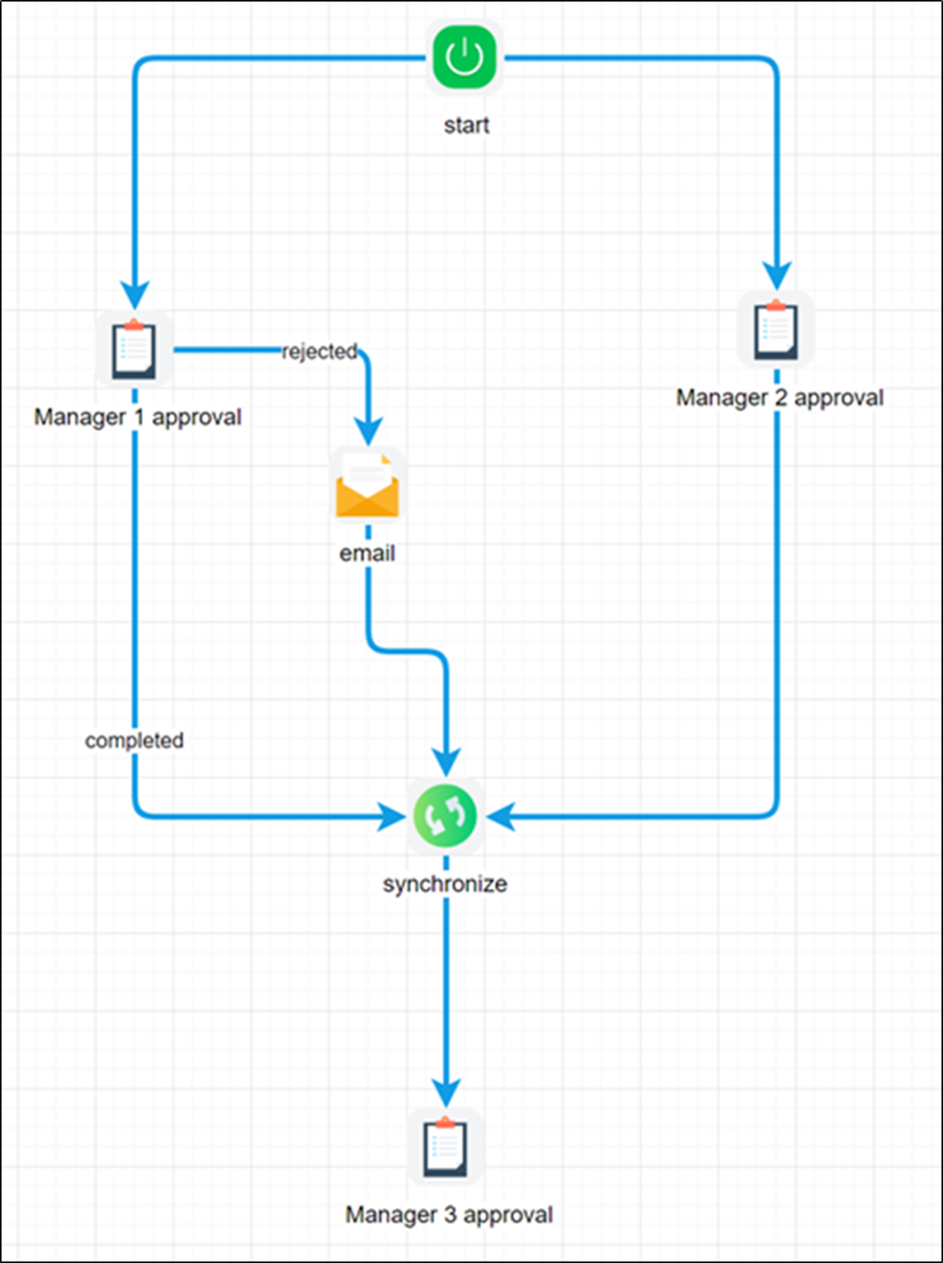
In the given scenario, if Manager 1 rejects the task, an email is then sent. This design poses a problem because all incoming connections to a synchronized step must execute before the workflow can progress, leading to extended turnaround. In this case, the synchronised step has 3 incoming connections, but only 2 will ever execute. The 'Place Holder' step is introduced to address this issue. It acts as a bridge, ensuring that all incoming connections to the synchronized step execute on time and as scheduled. This is just one scenario where the 'Place Holder' step proves its worth.
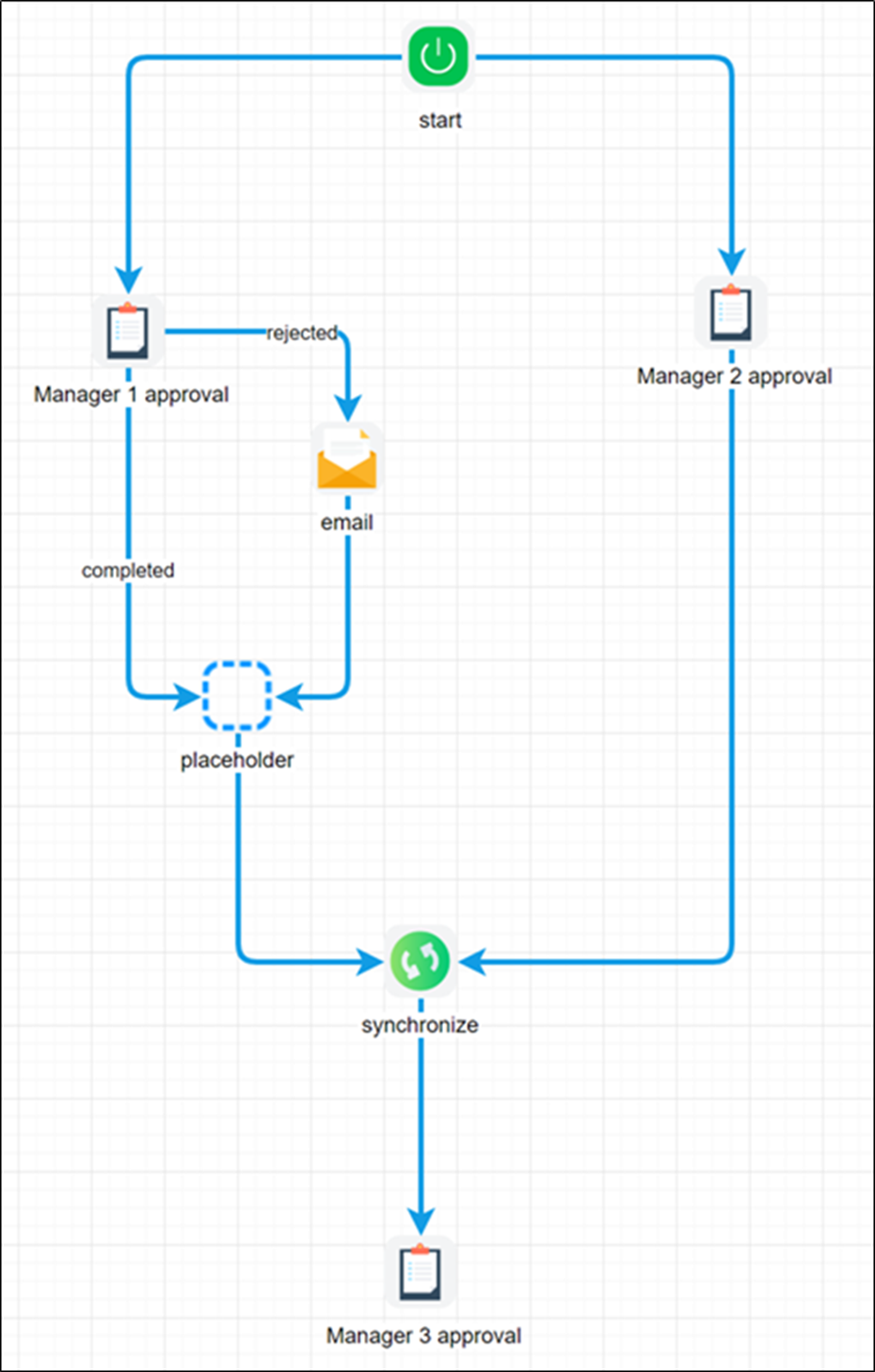
Regarding the diagram above, connections from the Manager 1 approval step lead to the “placeholder” step and then continue to the synchronize step. This design ensures that all incoming connections to the synchronize step are executed on time and as scheduled. This is only one scenario, but the “placeholder” step helps with many others.
In previous versions of FlowWright, some customers used the 'Decision' step to simulate the 'Place Holder' step by setting the expression to '1==1', which always evaluates to 'true' and passes through. However, this approach incurred a performance penalty. This performance issue is resolved by the new 'Place Holder' step, which provides a more efficient solution.